WEHI & Royal Melbourne Hospital – Colonial Foundation Diagnostics Centre
Following the success of the Colonial Foundation Ageing Centre, the Colonial Foundation Diagnostics Centre was initiated through a new $21 million philanthropic grant. The grant will establish a pioneering research centre to advance precision diagnosis for diseases that affect millions of Australians.
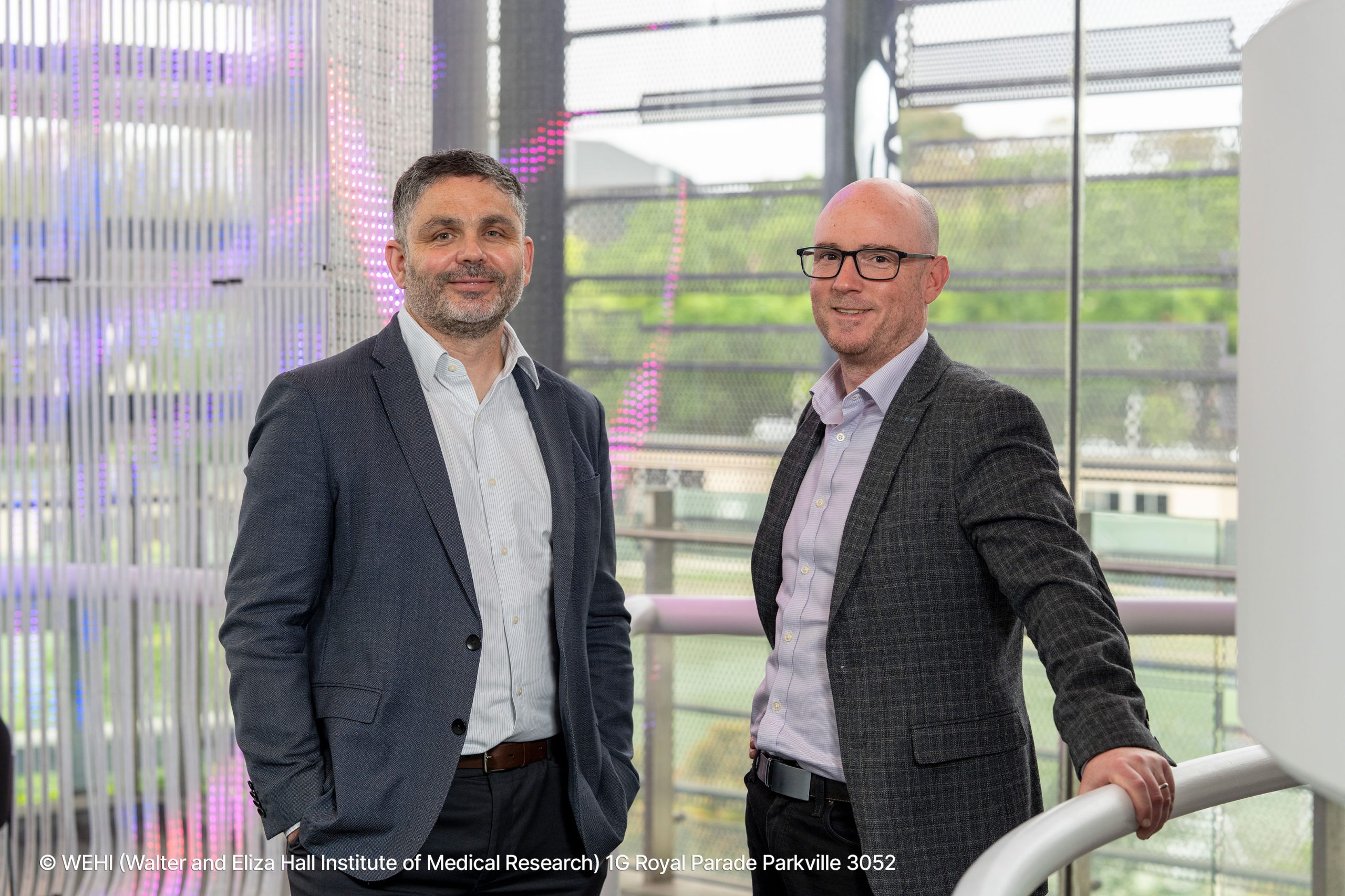
The Colonial Foundation Diagnostics Centre will use cutting-edge ‘spatial biology’ technologies to deliver enhanced diagnosis and, in turn, personalised care for patients with inflammatory diseases, like rheumatoid arthritis and inflammatory bowel disease.
The centre, co-led by WEHI and the Royal Melbourne Hospital, and funded by the Colonial Foundation, builds on an existing partnership. The new centre builds on the achievements of the Colonial Foundation Healthy Ageing Centre, which the three organisations established in 2019 to pursue a blood test for dementia. The Colonial Foundation Diagnostics Centre expands this focus to include inflammatory diseases.
Around one-in-ten Australians have a chronic inflammatory disease, like rheumatoid arthritis, inflammatory bowel disease, multiple sclerosis and lupus. Over 400,000 Australians have dementia, two thirds of whom are women.
Diagnostic tests that better detect, categorise and monitor these diseases are sorely needed. Improved diagnostics would help patients along their treatment journeys which can be long due to imprecise testing options currently available.
The centre will combine the RMH’s clinical capabilities with WEHI’s nation-leading, comprehensive suite of spatial biology techniques, and the skilled scientists who use them, to enable precision medicine and improve patient outcomes.
Spatial biology (or spatial omics) is a revolutionary approach to understanding disease, that uses sophisticated imaging to allow scientists to explore cells in tissue samples without disturbing how they would be naturally positioned in the body. This provides a deeper understanding of disease progression and helps identify potential treatment targets.
The vision is to develop new kinds of diagnostic tests to detect common inflammatory diseases and dementia, and even to determine which patients are most at risk of organ transplant rejection. It’s hoped that these tests will revolutionise how these conditions are detected and treated.